
Natural Tick Repellents: Effective Essential Oils You Need
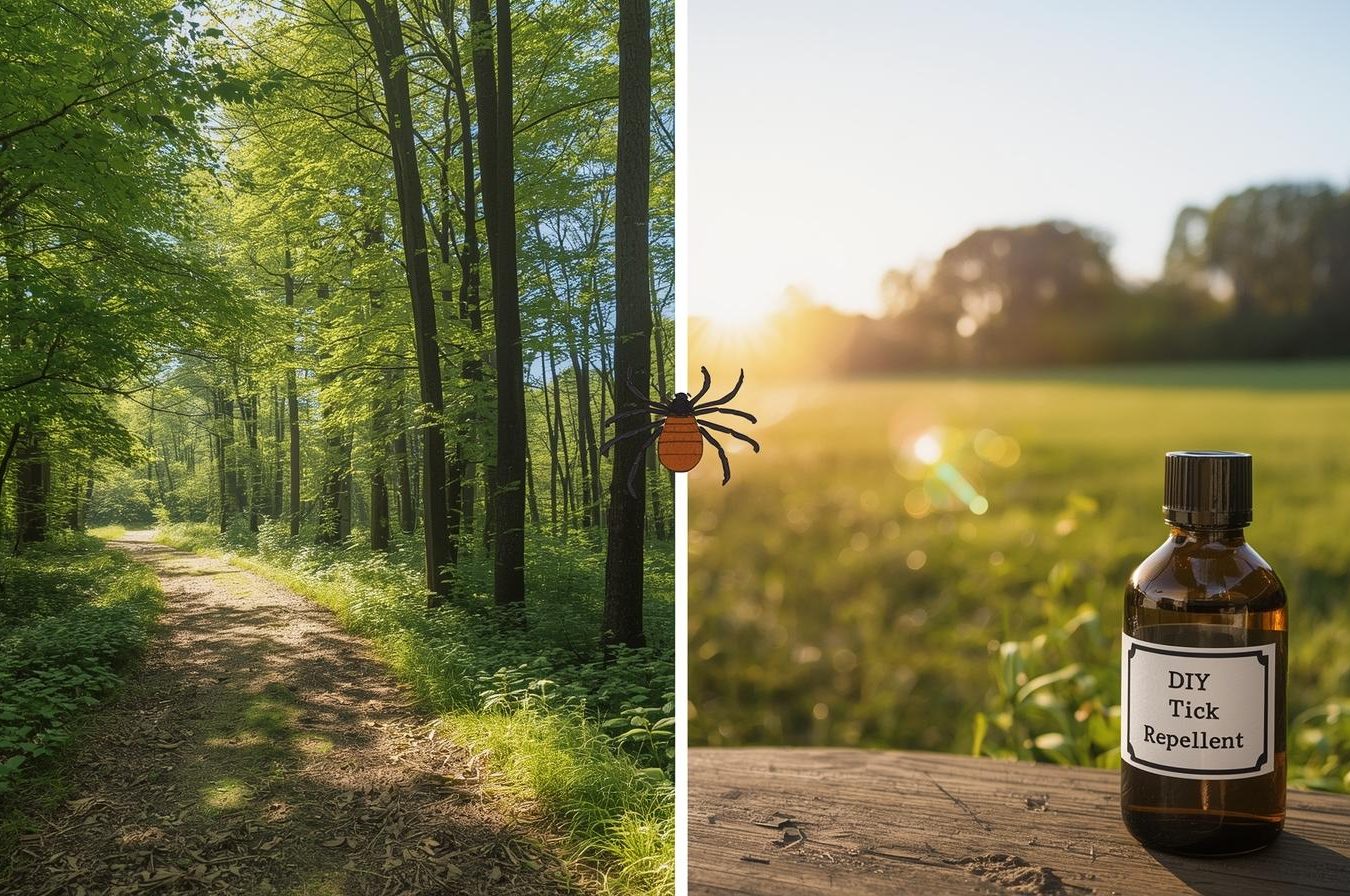
As summer approaches, so do our adventures in the great outdoors—and with it, the unwelcome presence of ticks. For years, DEET has been the go-to active ingredient in insect repellents, lauded for its effectiveness. However, concerns about its chemical nature have many of us searching for natural, organic alternatives that offer similar protection without the harsh chemicals.
Good news! Scientific research is increasingly shedding light on the potent tick-repelling properties of certain essential oils.
In this post, we’ll dive into the most effective natural essential oils, discuss why they work, and guide you through making your own DIY organic tick repellent spray.
Why Seek Alternatives to DEET?
While DEET is highly effective, many people experience skin and irritation, most can’t deal with the smell and there are environmental concerns about its widespread use. For those who prefer a more natural approach, essential oils offer a compelling solution, drawing on centuries of botanical wisdom now backed by modern science.
The Most Effective Natural Tick-Repelling Essential Oils (Backed by Science!)
Not all essential oils are created equal when it comes to tick defence. Here are the champions, identified through peer-reviewed research:
- Oil of Lemon Eucalyptus (OLE)
- Why it works: This is the only plant-based active ingredient recommended by the USA’s Centers for Disease Control and Prevention (CDC) for tick repellence. Studies consistently show OLE (specifically the compound p-Menthane-3,8-diol or PMD) can be as effective as lower concentrations of DEET, providing several hours of protection.
- Scientific Support: CDC Recommendations on Mosquito and Tick Prevention, CDC Yellow Book: Environmental Hazards & Risks
- Rose Geranium Oil (Pelargonium graveolens)
- Why it works: Often hailed as a star player in natural tick repellence, rose geranium oil contains compounds like geraniol and citronellol that are highly effective at deterring ticks. Research has shown its repellent activity against tick nymphs to be comparable to DEET at certain concentrations.
- Scientific Support: Bioactivity-Guided Investigation of Geranium Essential Oils as Natural Tick Repellents – Journal of Agricultural and Food Chemistry
- Thyme Oils (Creeping Thyme & Red Thyme)
- Why it works: Various thyme essential oils, particularly creeping thyme and red thyme, have demonstrated strong repellent efficacy against adult ticks. Some studies even suggest that combining them with other oils, like citronella, can significantly boost their power.
- Scientific Support: The repellent efficacy of eleven essential oils against adult Dermacentor reticulatus ticks – ResearchGate
- Clove Oil
- Why it works: Clove oil stands out for its high mortality rates and strong repellency against certain tick species. Its efficacy is often attributed to its main compound, eugenol.
- Scientific Support: The repellent efficacy of eleven essential oils against adult Dermacentor reticulatus ticks – ResearchGate
- Spearmint & Oregano Oils
- Why it works: These commonly found oils have shown impressive results in repelling ticks, particularly when applied to clothing. One study found their effectiveness to be equivalent to 20% DEET in field conditions.
- Scientific Support: DEET and Natural Tick Repellents – Daniel Cameron, MD (Summarizing study data)
- Cedarwood Oil
- Why it works: Research indicates that cedarwood oil can be an effective repellent against black-legged tick nymphs, sometimes performing similarly to DEET in laboratory tests.
- Scientific Support: Repellency and Toxicity of Cedarwood Oil Against Four Species of Hard Ticks – NCBI
Your DIY Organic Tick Repellent (and a Convenient Pre-Made Option!)
You can create your own custom tick repellent blend or, for an even easier solution, choose a reputable pre-made product and simply add a boost of scientifically-backed protection.
Option 1: The “Powerhouse” DIY Spray
Crafting your own tick repellent is simple and allows you to control the ingredients. Remember, dilution is keywhen working with essential oils to prevent skin irritation.
What you’ll need:
- A 100ml glass spray bottle (essential oils can degrade plastic)
- 2 tablespoons of a carrier oil (e.g., Fractionated Coconut Oil, Jojoba Oil, Almond Oil, Witch Hazel for a lighter spray)
- Distilled water (to fill the rest of the bottle)
- Your chosen essential oils (total 30-40 drops for a 100 ml bottle, aiming for a 2-3% dilution for adults)
Recommended Essential Oil Blends (Choose one or create your own!):
Blend 1: The “Powerhouse” Blend
- 15 drops Rose Geranium essential oil
- 10 drops Oil of Lemon Eucalyptus (not regular lemon eucalyptus essential oil)
- 10 drops Thyme essential oil
Blend 2: The “Woodsy & Minty” Blend
- 10 drops Rose Geranium essential oil
- 10 drops Cedarwood essential oil
- 10 drops Spearmint essential oil
- 10 drops Oregano essential oil
Blend 3: The “Spicy Defender” Blend
- 15 drops Rose Geranium essential oil
- 10 drops Clove essential oil
- 10 drops Red Thyme essential oil
Instructions:
- Add the carrier oil (or witch hazel) to the glass spray bottle.
- Add your chosen essential oils to the bottle.
- Fill the rest of the bottle with distilled water, leaving a little room at the top.
- Shake well before each use to ensure the oils are dispersed.
Option 2: Boosting a Pre-Made Product
For a convenient and effective shortcut, you can use a high-quality, plant-based organic repellent as your base. A great example is the Eco Sonya Citronella Personal Outdoor Spray, which already contains many of the key botanical repellents citronella, basil, lemongrass, cedarwood, and lemon eucalyptus oils.
To give it a powerful boost of scientifically-backed tick defence, simply add a few drops of Rose Geranium essential oil directly into the bottle. A great starting point is to add 15-20 drops per 100ml of the product. Rose geranium is one of the most effective essential oils against ticks, making it a perfect addition to enhance the repellent’s overall protection.
How to Use Your Tick Repellent:
- Apply directly to skin: Spray evenly on exposed skin before heading outdoors.
- Apply to clothing: Essential oils can also be sprayed on clothing, socks, and hats for added protection.
- Reapply: Natural repellents typically need to be reapplied more frequently than DEET-based products, usually every 1-2 hours or after sweating/swimming.
- Patch Test: Always perform a patch test on a small area of skin first to check for any sensitivities.
- Safety Note: Always avoid spraying directly on the face. Instead, spray onto your hands and then apply carefully to your face, avoiding eyes and mouth. These recipes are generally for adults; you might need to dilute by half and apply more frequently if you intend to use them for your children. Some essential oils may not be suitable for pets, so consult your vet before you use on animals.
By harnessing the power of nature, you can enjoy your outdoor adventures with greater peace of mind, knowing you’re protected by effective, organic alternatives to traditional chemical repellents. Stay safe and happy exploring!


